
rem: figbuild 2026
Overview
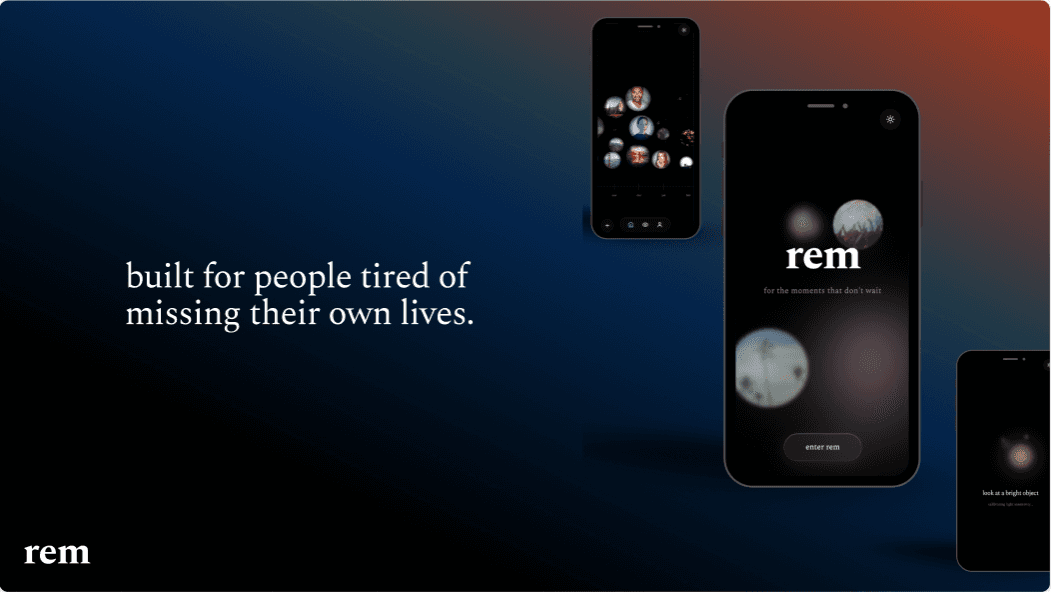
rem is a speculative tool we designed at FigBuild 2026, built for people tired of missing their own lives. It's a smart contact lens that reads your body's signals (pupil dilation, gaze duration) and passively captures the moments it recognizes as emotionally meaningful, paired with an app that keeps them. You live, and rem keeps up.
We used Figma Design to ideate and build the brand, Figma Make for the working prototype, and Figma Slides for the final presentation.
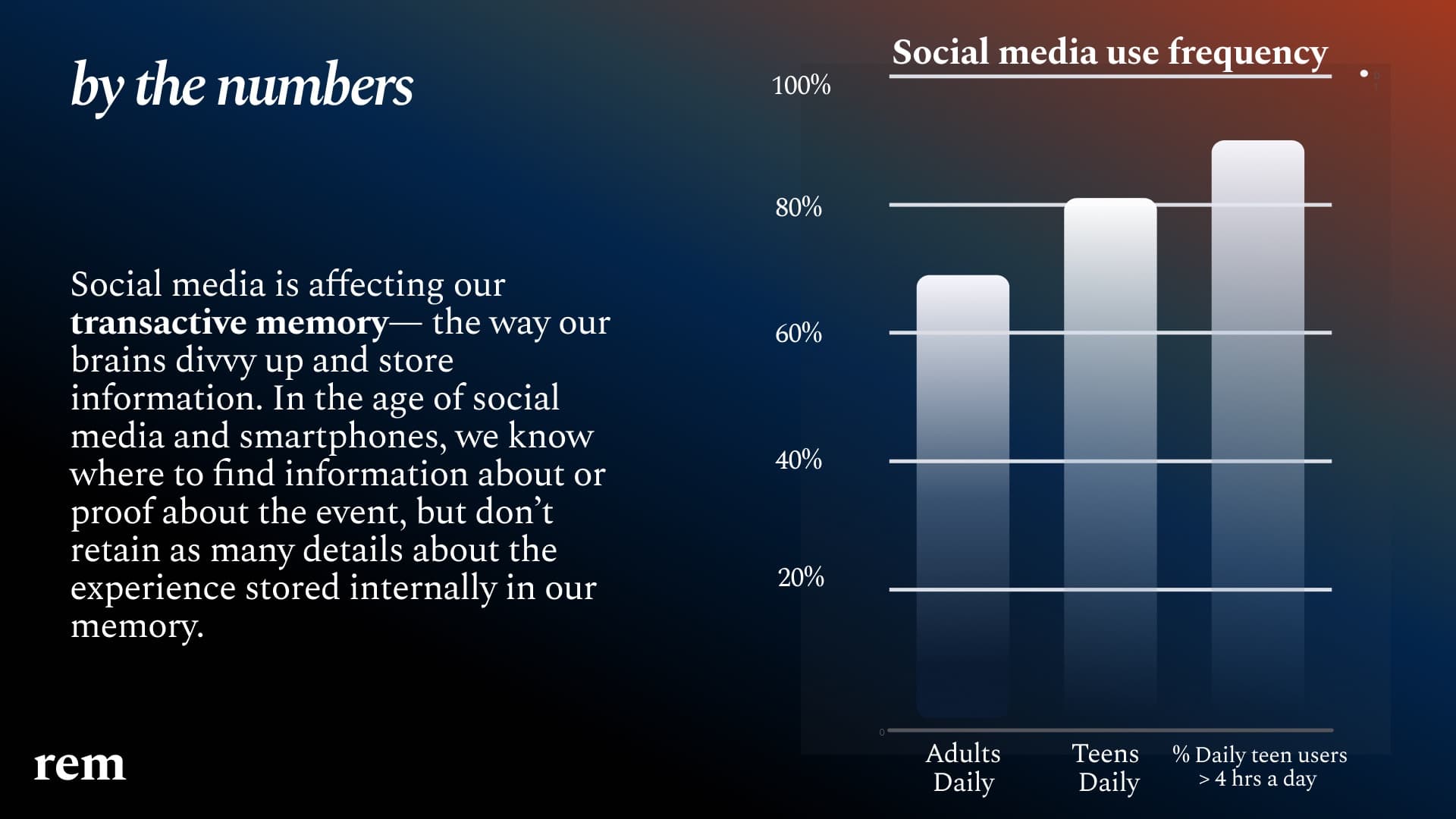
Taking a photo makes you remember it worse
We started from a well-documented effect: photographing something impairs your memory of it. Your brain outsources the remembering to the device and stops encoding the experience itself, which researchers call transactive memory. The studies we pinned to the wall put numbers on it: 91% of people rely on digital devices as an extension of their memory, and 78% of 13-to-17-year-olds check their phone at least hourly.
So if the camera is making memory worse, what would a camera that asks nothing of you look like? Our framing for the weekend: how might we help people become more present by detecting moments of emotional significance as they happen?
We designed for three people we already knew
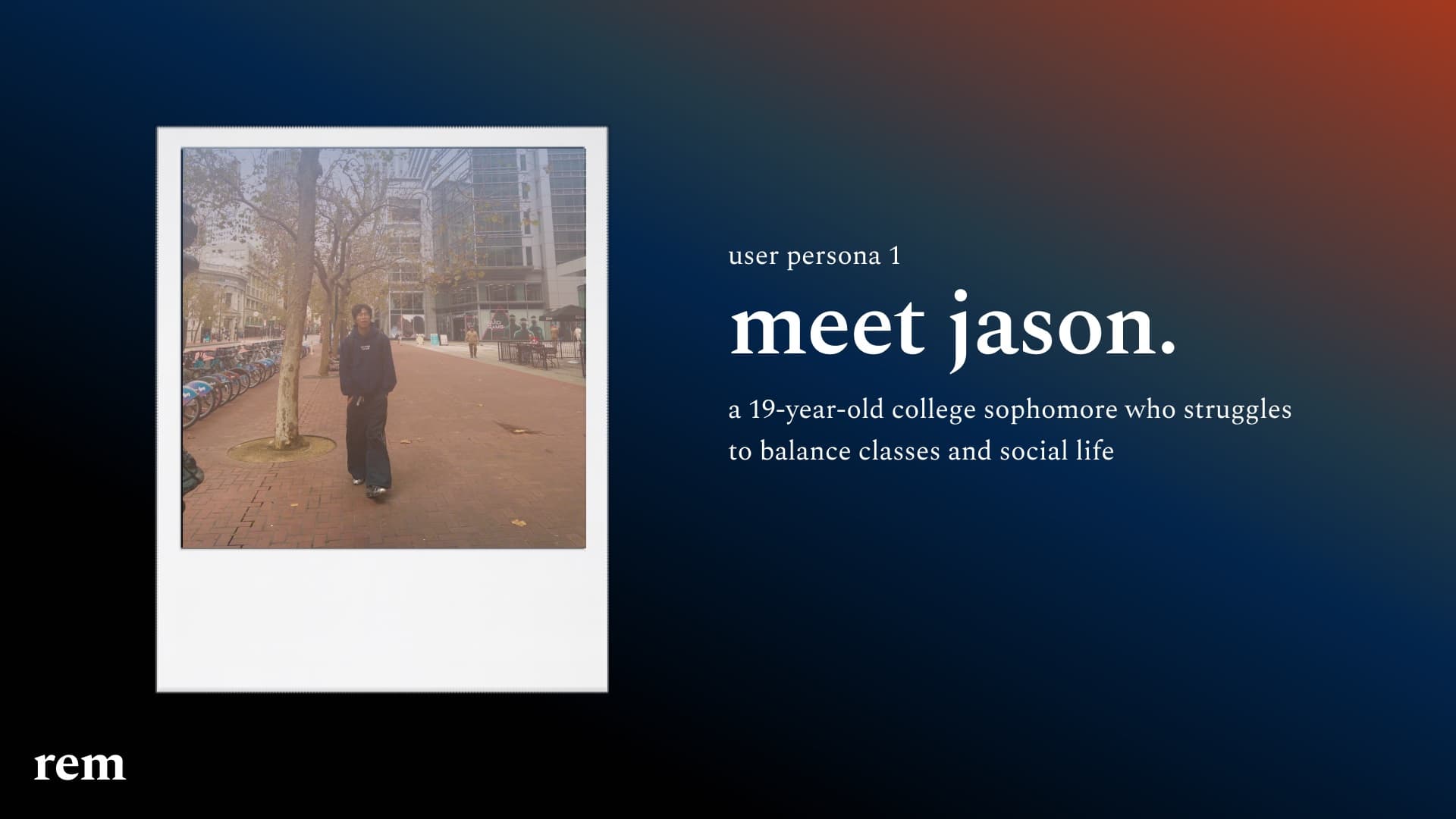
Jason, a college sophomore whose weeks pass in a blur and whose camera roll is full of photos with no emotional weight. Rebecca, 24, new to the workforce and to New York, missing her family through days that feel identical. Audrey, 22, an artist who never thinks to document quiet studio nights, then months later realizes those were the moments she misses most.
All three needed the same thing: a way to keep what matters without stopping to capture it.
The lens reads your body, not the scene
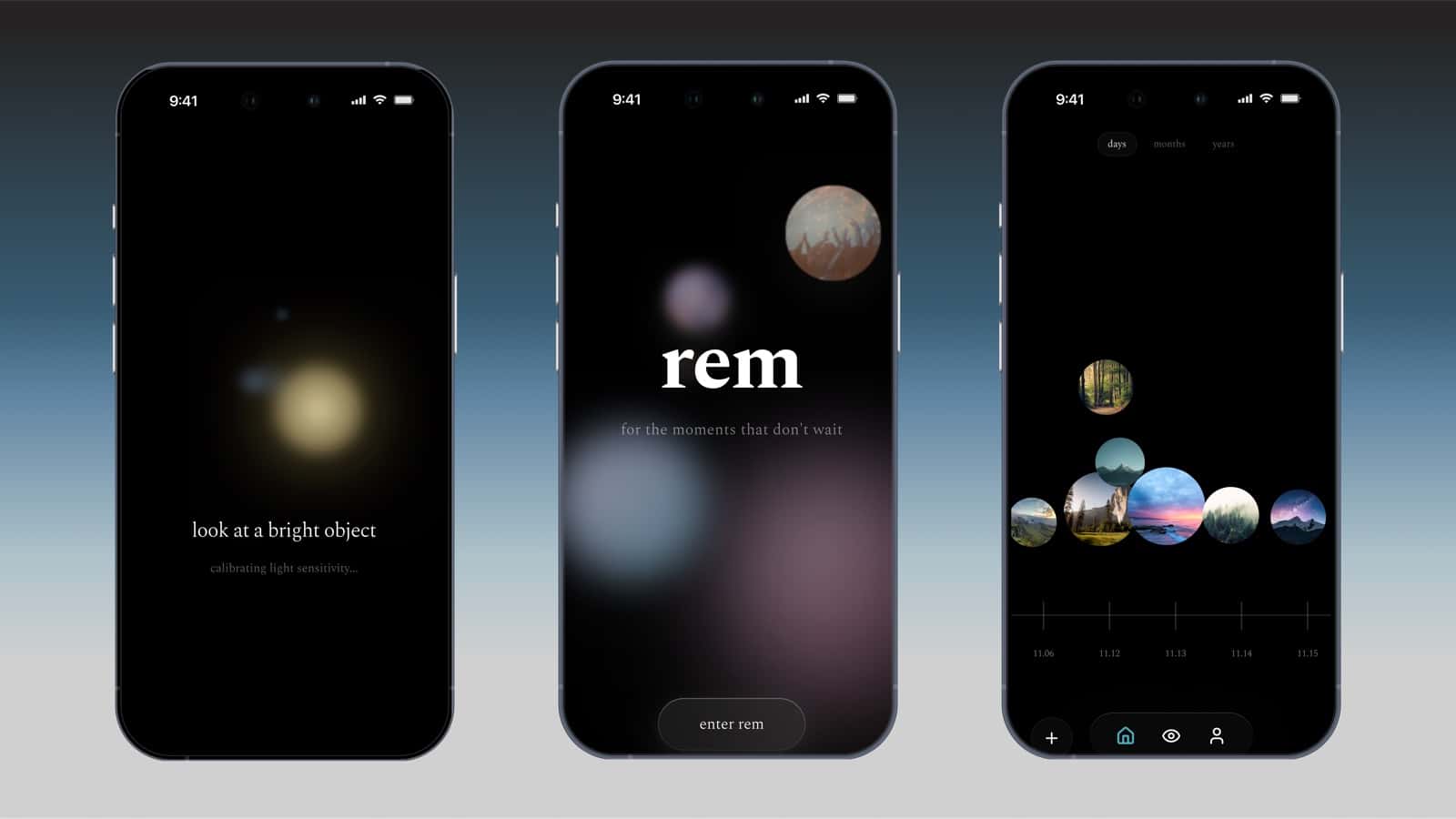
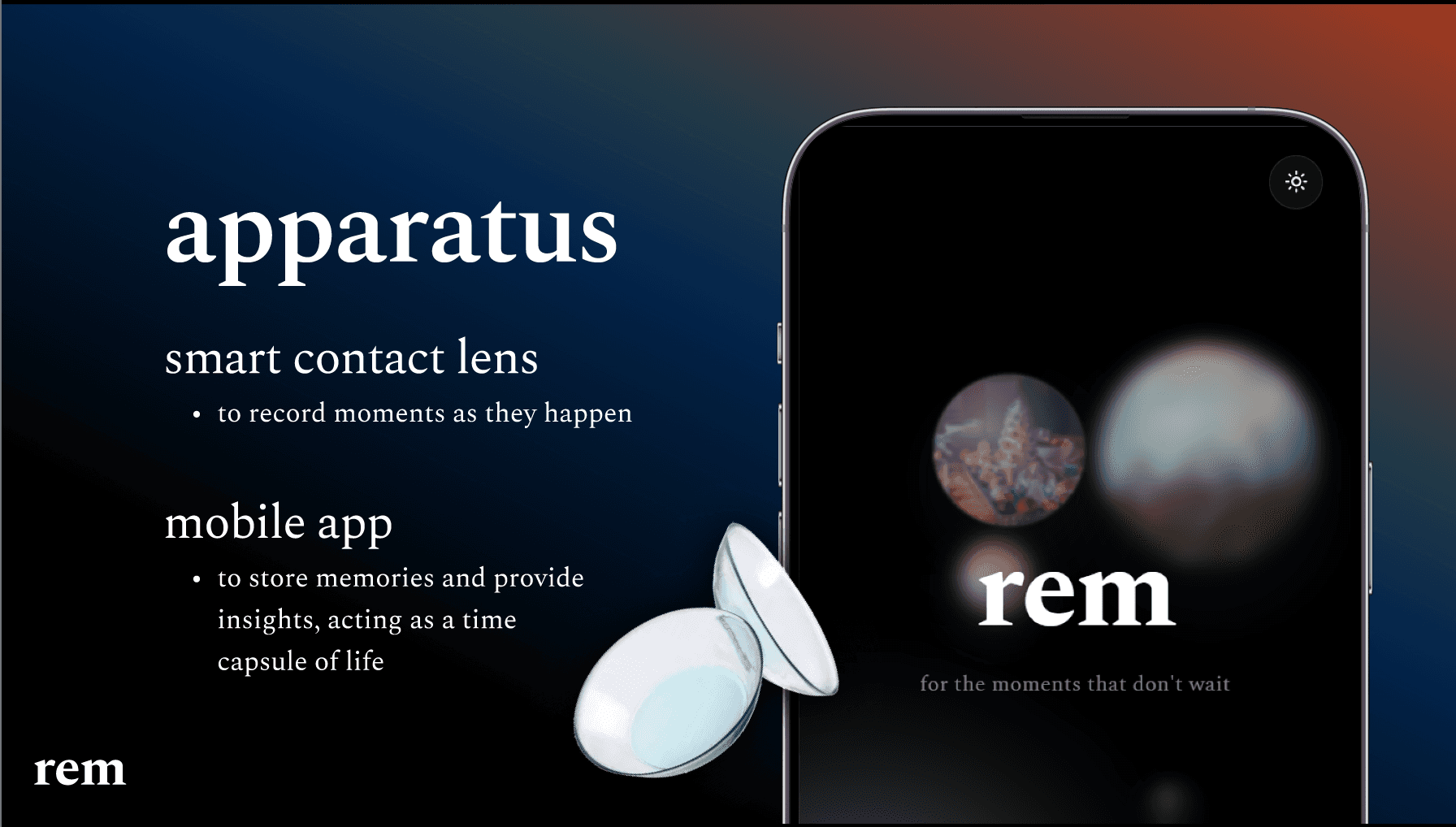
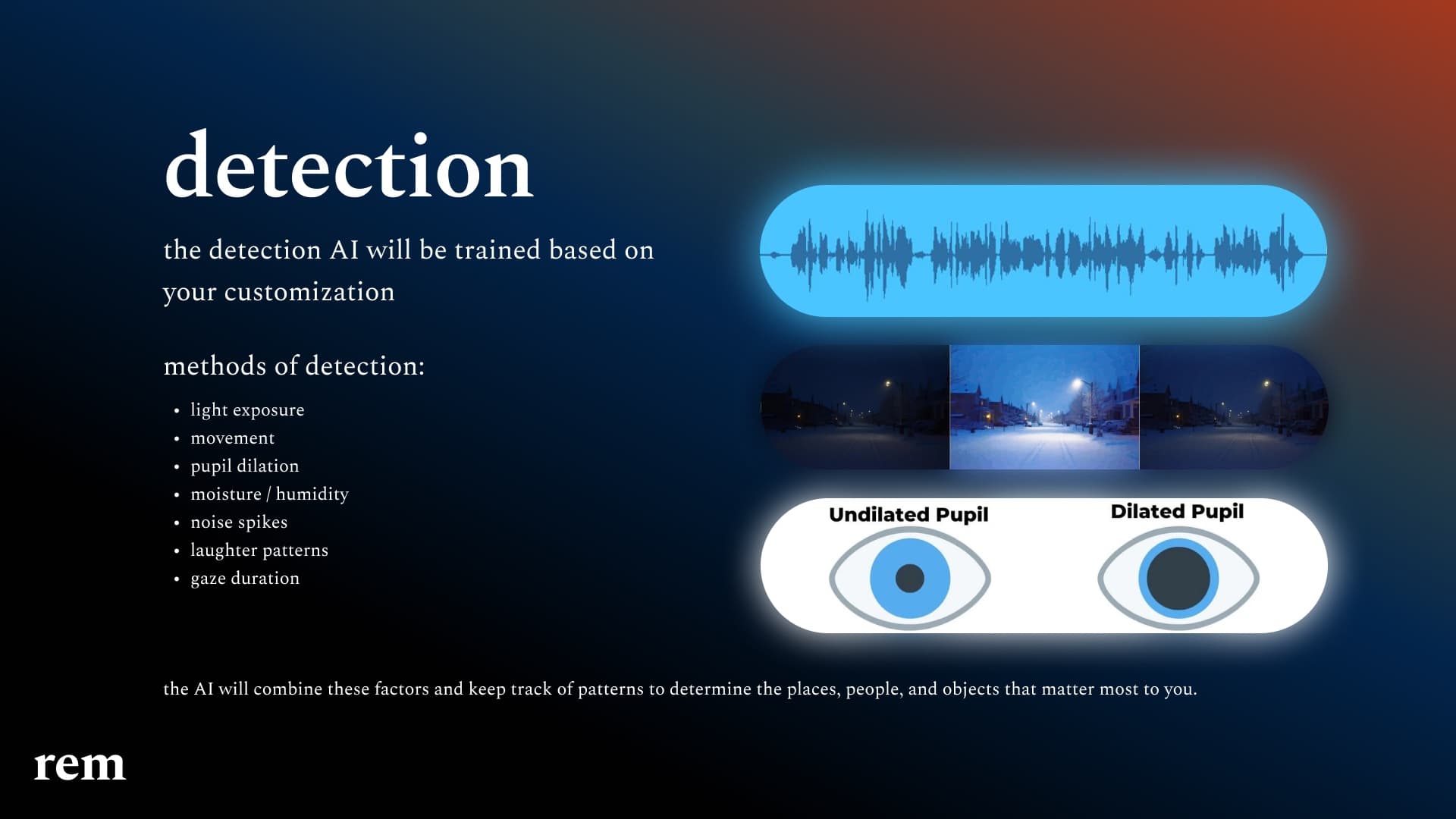
rem is two devices. The lens watches for the physical signs that a moment matters: pupil dilation, prolonged gaze, laughter, noise spikes, changes in movement. It starts recording before you'd even think to reach for a phone. Onboarding is a calibration. The app asks you to look at a bright light, then at an object that matters to you, and tunes detection to your own biometrics.
Every trigger is customizable from the app: sensitivity, recording preferences, and which signals you don't want tracked at all.
The app is a time capsule, not a camera roll
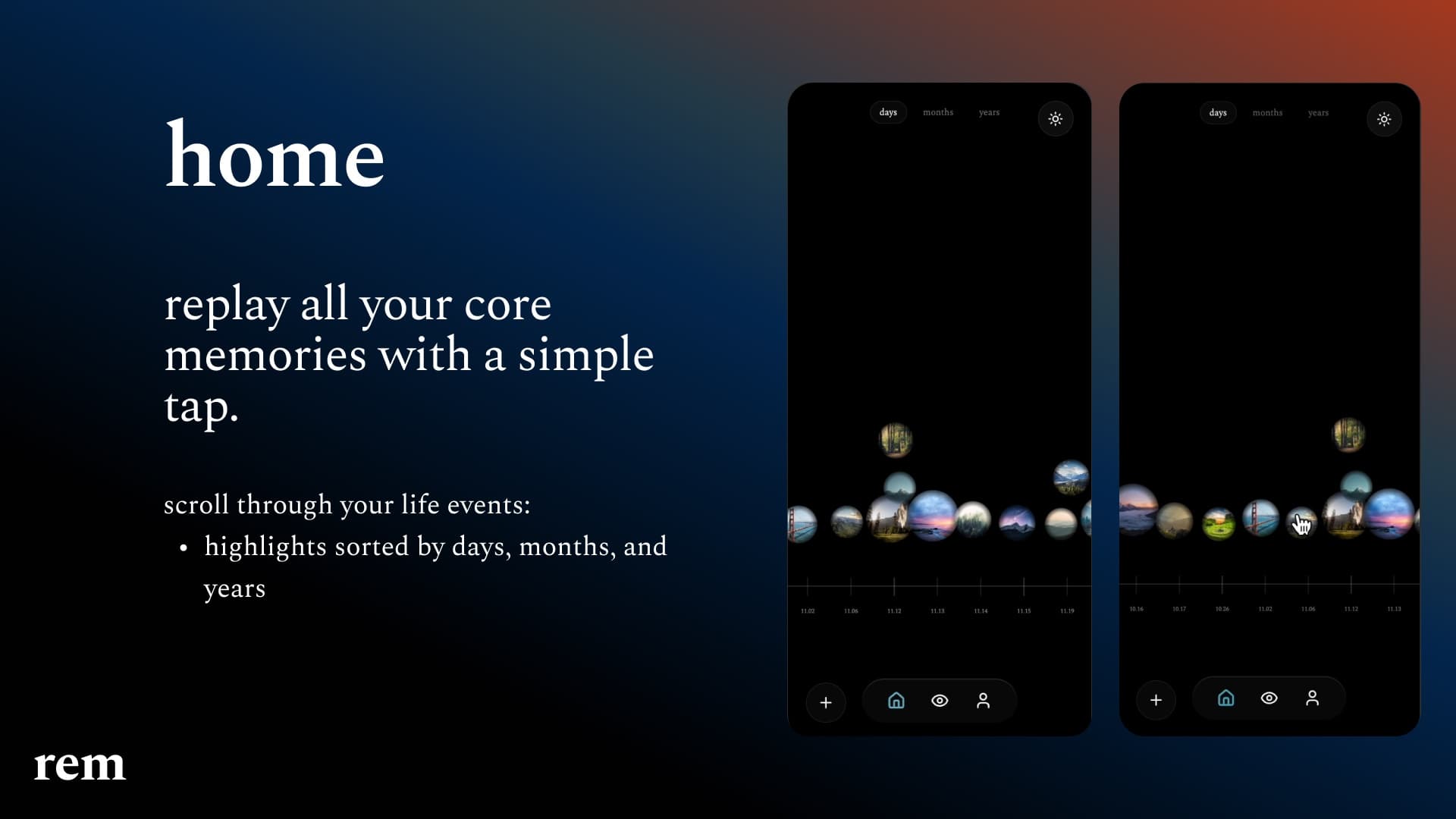
Captured moments live as floating orbs you scroll through by day, month, and year, each replayable with a tap. Over time rem finds the patterns: for Jason, that his most meaningful memories come from unplanned late-night conversations; for Audrey, that the process of creating is where she feels most fulfilled. That pattern is the actual product.
Privacy was the hardest wall
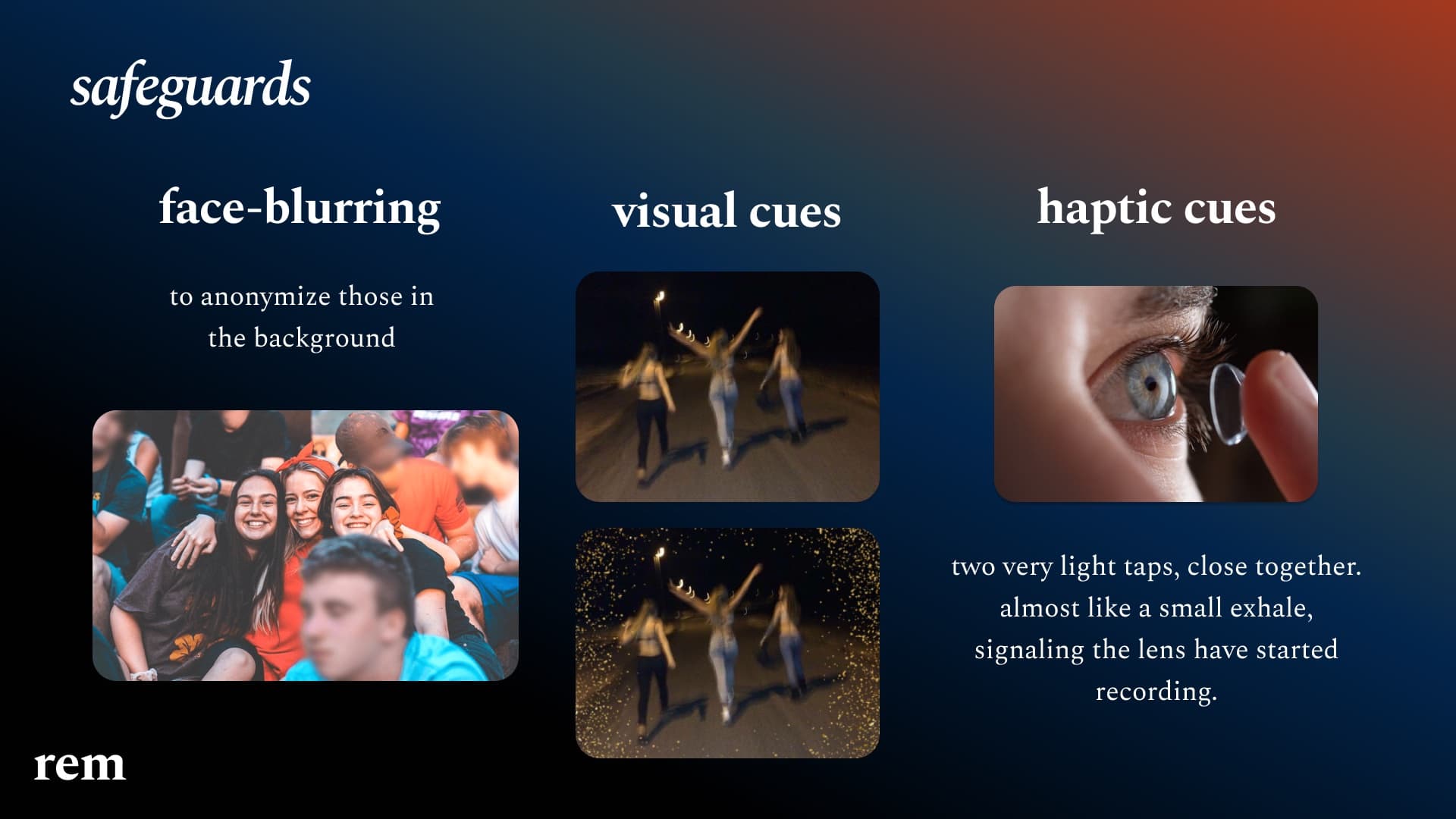
A device that records passively is uncomfortable, and we didn't want to trade privacy for novelty. So the safeguards are real features. Lenses pair one-to-one on biometrics, so only you can ever access your own footage. Recording pauses any time you want, privacy modes and per-trigger opt-outs live one tap deep, and faces in the background stay blurred. The lens also announces itself: a visual cue for others, plus two light haptic taps, almost like a small exhale, telling you it has started recording.
We spent real time on where the product's responsibility ends and the user's begins. There's a liability page in the deck, and we didn't bury it.
The philosophy survived the weekend intact
What we're most proud of: from the first sketch to the final prototype, rem never asks anything of you in the moment. It's built around chronoception, the perception of time passing, a feeling most people have but can't name. And it takes that feeling seriously instead of gamifying it. It's a tool for a generation raised on social media and emerging AI, designed to hand the remembering back.